Wicked Intentions

By Ali Baylay

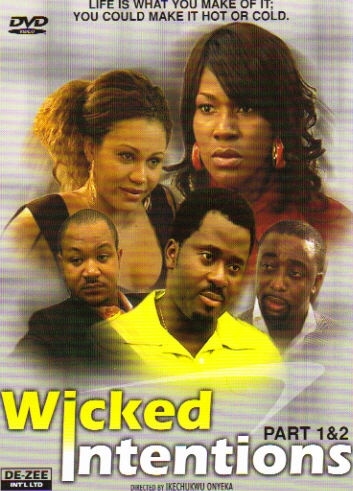
The last time I was ridiculed, confused, and puzzled by a literary genre was when I read Wole Soyinka’s Interpreters. I read it twice with no success at understanding the novel, until an O’level class friend of mine recommended Fourah Bay College Edred Jones’ treatise, Interpreters Interpreted. Even at that, I can’t hardly have intelligent discourse on the Interpreters. In all my movie reviewing experience, Wicked Intentions baffles me the same way Interpreters does, though in the case of Wicked Intentions, the problem doesn’t come from literary ingenuity as with Soyinke’s Interpreters, a sage from the class of the likes of James Joyce, than from pure editorial oversight. Wicked Intentions is narrated mostly in flashback mode. I guess.

The movie starts with a playerlike character, Jim (Desmond Elliot), who brings girls after girls to his shag (breakheart mansion), his palour, the likes of a nouveau-riche, and creates steaming love scenes with them. He makes them believe he’s all they dream about in relationship, only to discard them the next day like a penny with a hole in it. Jim’s quest is to win over a love partner with just enough money and beauty as not to intimidate him. He runs into Charlene (Stephanie Okereke). She kisses men and leave them crying. Charlene has similar characteristics to that of Jim. Like two liars, their relationship thrives on deceptions, false promises, and hopes. I guess.

On the other hand, Charlene’s bed-ridden dad fakes heart attacks to snare her into marrying a Chubby fellow of her distaste. The chubby fellow tries couple of attempts to win over this miss-hard-to-get, but instead gets splashed in his face with a bucket full of water. Relentless though, he hired two guys who kill Jim on their wedding day even as Charlene escapes town before she says, “I do”. I guess.

Charlene explains the entire story to Kamsi  (Nadia Buari) from her POV,  by way of giving her reason why she Charlene couldn’t accept Chris (Smith Asante) in marriage even as he placards banner of love on the wall for her. A writer once said, “Stephanie has an infecteous smile, and get to talk to her, she’ll treat you like an old acquaintance”. Since her Nollywood debute in Compromise 2 in 1997, Stephanie has always brightened Nollywood screen in most of her movies. Wicked Intentions is one of those movies she performs her flawless acts. With no sweat, Steph could easily be a Hollywood material.

» No Comments

Stars Can’t Save Area Mama Script

By Ali Baylay

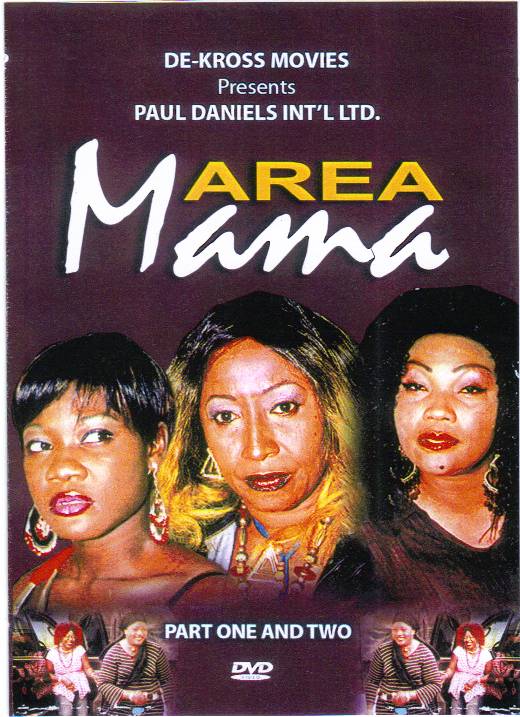
The second major location in Area Mama (De-Kross Movies) introduces the viewer to an ill-clad wife, Adanne (Mercy Johnson), as she sits in a barren living room feeding her son with garri when her husband drunkenly staggers into the room and jumps on her in a fight. The abuse continues until Adanne bloodies the husband’s forehead before escaping with her son from the scene. At her aunt’s home, Celia, her globe-trotting drug courier cousin who doesn’t believe in “stupid marriages” and thinks “a woman’s life is not all about marriage,” volunteers to take Adanne to the city. In Lagos, she hands Adanne over to Mama Gee who manages a household of Ashawos (prostitutes). What Adanne is about to find out is that “In Lagos every dog eats shit” as Celia will later tell her.

A producer means business when he casts two top billing actresses, Eucharia Anunobi (UK) and Mercy Johnson, and crowns them up with Patience Ozukwor. I mean Mama Gee, the mother of Nollywood films. The trio can set any screen afire and they manage to pull off one poorly written screenplay in Area Mama.

An unguarded women’s liberation this story is, though. Adanne runs from an abusive marriage in exchange for running the streets of Lagos, even to the point of sleeping with men whose “concern for a prostitute is the action and not any emotional problem”; Celia (Eucharia Anunobi) condemns marriage but traffics drugs from one continent to another while she keeps a gigolo in her bed; and Mama Gee (Patience Ozukwor) runs a brothel and finances a younger man as she sits in loneliness and drinks her life away. One must assume there is something missing in the lives of these so-called liberated women.

Mercy Johnson, who made her screen debut in Kenneth Nnobue’s The Maid , recently interviewed for the AfricanMovieStar.com, denied sleeping with the top brass in Nollywood, but in Area Mama she learns fast at playing an excellent hooker. However, the poor screenplay couldn’t allow the Igbira babe to give a stellar performance.

Area Mama is a story with universal lessons: One can never run away from the truth as evidenced in the personal experience of Adanne. She escapes an abusive husband but ends up in brothel servicing an abusive patron. Second, money can’t bring happiness as Celia with all the fleet of cars and the mansion would come to find out that while she’s away slugging it out like a man and trafficking drugs between continents, the gigolo she leaves at home entertains prostitutes in her bed – monkey wok baboon eats. Lastly, the irony of Mama Gee stuffing her little cache with Naira made off of a stable of innocent girls, a table in front of her full of imported liquor, and drinking herself to death does not spell happiness. The first time Mama Gee appears in this movie, she’s alone and she ends up alone at the end of the story.

Area Mama isn’t a redemption song for the African woman nor is it an advise for the woman in abusive marriage. To an extent, it tells the viewer the level Adanne falls from grace by following the footpath of Mama Gee and Celia; that running a brothel, no matter how lucrative, can be a lonely one. And the fleet of cars and a mansion bought with drug money buys Celia fake friends.

» No Comments

Corporate Maid

By Ali Baylay

It’s Mercy Johnson again! This time she’s a three-dimensional character in a convoluted story. She plays Miss Rose, a straight-jacketed English maid who has a lesbian affair with the lady of the house; then she sleeps with the husband of the house and tops it off by sleeping with the house cook in her quarters. Corporate Maid explores comedy, tragedy and lesbianism.

In this African film, the whining wife of Chris (Van Vicker) is never satisfied with the services of the maids in their marble-laden mansion. To train her maids to be staff of her dreams, she hires a trainer (Miss Rose) to get her three maids into shape. The training starts well enough as soon as Miss Rose joins the household.

It is a hilarious ride from the moment the film fades in. Then comes news of the Chris’s death in a plane crash and the comedy comes to an abrupt end. Chris’s parents intend to claim the property and his wife hurries to take charge of his papers before they beat her to it.  Miss Rose gets in the mix with a lesbian affair with her boss lady, as she consoles her in her demise.  But when the husband reappears Miss Rose lures him into bed too, and finally ends the sexual escapades in the guest room with the house cook (Charles Unoji). She escapes the mansion in shame and the movie ends.

Corporate Maid crashes as a comedy when news of Chris’s imminent plane crash reaches the household. The crash incident in the story completely reroutes this comic story into exploring lesbianism in African films. The comic stunts of Charles Inoji captivate the viewer taking us on that ride into the kingdom where we temporarily put away our worries, then boom! Tragedy strikes and it’s not even a comic type. No film captures viewers by dropping tragedy into the middle of a comedy. Especially when the tragedy occurs to their beloved star Van Vicker.

To expect the African viewer, your target audience base, to view lesbianism on screen and at the same time laugh about it is unrealistic. On first viewing it, they will likely revolt. To most it’s an abomination! In the middle of the film, I expect they would take a bathroom break or simply stop watching. The comedy is out the door, replaced by a serious social debate: lesbianism versus our African sexual tolerance.

Corporate Maid starts out as a farce with hearty laughable scenes but goes on to explore uncharted social waters that could as well be Modern African Cultural Studies 101. Better yet, let’s call this flick Desperate Maid.

» 2 Comments